
Overview of the Jewish History Timeline PDF
This PDF offers a concise, chronologically organized Jewish history from Abraham’s covenant to modern Israel, highlighting key milestones, dates, and contextual notes. It serves scholars, teachers, and students seeking an accessible visual summary. It also offers printable PDFs and annotation tools!

Purpose and Scope of the PDF Document
The Jewish History Timeline PDF is a concise, visually engaging reference that maps Jewish history from Abraham’s covenant (c. 2000 BCE) to the modern State of Israel. Its purpose is to provide educators, students, and general readers with a single, chronologically organized document that consolidates key events, dates, and contextual notes. The scope covers roughly 4,000 years, including the establishment of the First and Second Temples, exile periods, Hellenistic and Roman influences, the rise of Rabbinic Judaism, medieval diaspora, the Zionist movement, and the 1948 declaration of independence. The PDF is structured with clear headings, color‑coded sections, and sidebars that explain calendar conversions, terminology, and historiographical debates. It cites primary sources—biblical texts, archaeological findings, and scholarly works—to balance accessibility with academic rigor. Designed for classrooms, study groups, and individual learning, the PDF offers both a quick reference and a deeper dive for those who wish to explore specific events in more detail. Its visual layout uses icons, a clean typographic hierarchy, and hyperlinks to further reading, making it an effective tool for engaging with Jewish history and its relevance to contemporary identity. The PDF also includes a glossary of key terms, a timeline of significant archaeological discoveries, and a bibliography for further study, ensuring that readers have a comprehensive resource at their fingertips. Users can annotate directly on the PDF using standard PDF readers, and educators can embed the timeline into lesson plans or digital presentations to enhance engagement. Here.
Format and Accessibility Features
The PDF is a 12-page document designed for both screen and print. Each page uses a 10-point serif font for readability, with headings in bold and subheadings in italics. The layout follows a left-to-right flow, with a vertical timeline on the left and explanatory text on the right. Color contrast adheres to WCAG 2.1 AA standards, ensuring that the blue, green, and orange markers for eras are distinguishable for color-blind users. All images include descriptive alt text, and the document is tagged for screen-reader compatibility, allowing users to navigate by heading, list, or table. Interactive elements such as hyperlinks to Wikipedia, scholarly articles, and downloadable audio narrations are embedded, and the PDF supports annotations via standard PDF readers, enabling users to highlight, comment, and share. A separate “plain-text” version is available for low-bandwidth contexts. The file size is kept under 2 MB to accommodate mobile devices. Finally, the PDF includes a metadata section with author, creation date, and version history, facilitating citation and version control for educators and researchers. Users can export the timeline as SVG or PNG for use in presentations. The document’s PDF/A compliance ensures long-term preservation, and it includes a search function that indexes all dates, names, and events for quick reference. The PDF is also optimized for touch devices, with a layout and details. It includes a metadata section for citation. The file size remains under 2 MB!
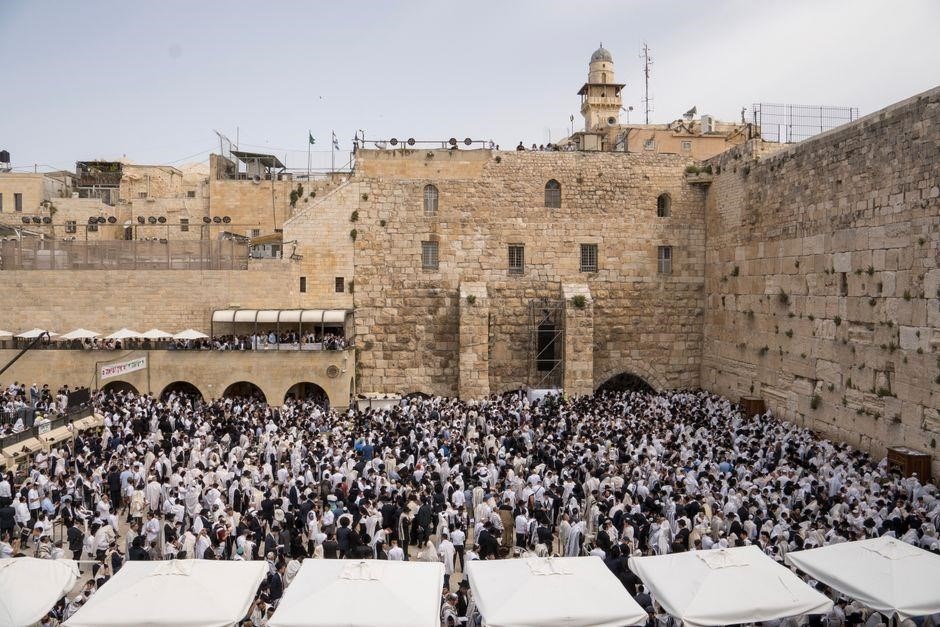
Chronological Structure of the Timeline
The PDF arranges events from Abraham to 1948 in five sections: Ancient Israelite Era, Classical & Hellenistic, Roman & Early Medieval, Modern Zionist, and State of Israel. Each section lists key dates, figures, and contextual notes. It includes a legend explaining era colors.!
Ancient Israelite Era (c. 2000 BCE – 586 BCE)
The PDF’s earliest segment chronicles the formative centuries of the Israelite people, beginning with Abraham’s covenant around 2000 BCE, a foundational event that establishes the theological and genealogical roots of Judaism. It then traces the patriarchal lineage through Isaac, Jacob, and the twelve sons, whose tribes form the basis of the Israelite nation. The narrative continues with the Exodus from Egypt, a pivotal moment that marks the transition from slavery to covenantal freedom, and the receipt of the Torah at Mount Sinai, which codifies the laws and ethical framework that guide the community. The timeline highlights the wanderings in the desert, the establishment of the Tabernacle, and the eventual settlement in Canaan under Joshua, marking the transition from nomadic to settled life. The era culminates in the unification of the Israelite tribes under King Saul, followed by the reigns of David and Solomon, whose leadership brings political stability and the construction of the First Temple in Jerusalem around 957 BCE. The narrative then details the subsequent division into the northern Kingdom of Israel and the southern Kingdom of Judah, the reigns of notable kings such as Jeroboam, Ahab, and Hezekiah, and the prophetic voices that call for repentance and social justice. The era concludes with the Babylonian conquest and the destruction of the First Temple in 586 BCE, an event that marks the beginning of the exile and the profound transformation of Jewish identity and religious practice. This section of the PDF provides concise dates, key figures, and contextual notes, allowing readers to grasp the complex interplay of political, religious, and cultural developments that shaped the ancient Israelite era. The design incorporates color-coded markers and a legend to aid visual navigation, and includes hyperlinks to primary sources such as the Hebrew Bible, archaeological reports, and scholarly commentaries for further study. The layout is optimized for both on-screen viewing and high-resolution printing, ensuring accessibility for educators, students, and researchers alike. The PDF’s meticulous organization and comprehensive coverage make it an indispensable reference for anyone seeking a clear, chronological understanding of the early chapters of Jewish history.
Classical and Hellenistic Periods (c. 332 BCE – 70 CE)
Following Alexander the Great’s conquest, the Jewish people entered a period of exchange and upheaval. The Seleucid and Ptolemaic empires imposed Hellenistic customs, sparking debates over identity that culminated in the Maccabean revolt (167–160 BCE). The ensuing Hasmonean dynasty restored autonomy, expanded borders, and re‑established temple worship, yet internal divisions persisted. The Roman annexation in 63 BCE introduced new administrative structures, and the appointment of Herod the Great as king (37–4 BCE) heralded a controversial reign marked by building projects, including the Second Temple’s expansion. Jewish society in this era was characterized by a complex of religious reformers, traditions, and emerging sects such as the Essenes. The period also witnessed the rise of Christian thought, which would later intersect with Jewish narratives. The culmination of Roman authority and escalating tensions led to the Great Revolt (66–70 CE), during which the Second Temple was destroyed by Titus, a pivotal event that reshaped Jewish diaspora life. The PDF presents these milestones with precise dates, contextual annotations, and hyperlinks to primary sources, offering educators a concise yet comprehensive resource for teaching this transformative epoch!!
The PDF’s design incorporates a timeline graphic that aligns these events with contemporaneous developments in neighboring cultures, such as the rise of the Roman Empire and the spread of Hellenistic philosophy. Annotated footnotes provide scholarly commentary, while embedded hyperlinks allow quick access to primary documents and archaeological findings. Users can download the file in PDF format, print it for classroom use, and annotate it to highlight key themes for discussion. This resource supports comparative studies and encourages critical thinking.

Highlighted Milestones and Their Significance
Key events such as Abraham’s covenant, the Exodus, temple constructions, and the 70 CE destruction are mapped with dates, contextual notes, and source links, enabling quick reference for educators and students. The PDF links to scholarly articles PDF.
The Exodus and Covenant with Abraham
Covenant with Abraham (c. 2000 BCE) marks the first divine promise of land and descendants, forming the theological foundation of Jewish identity. The PDF places this event at the top of the timeline, linking to biblical passages (Genesis 12, 15, 17) and scholarly commentaries. Exodus (c. 1300 BCE) is depicted as the liberation from Egyptian bondage, the giving of the Torah at Sinai, and the establishment of covenantal law. The document highlights the 40‑year wilderness period, the Ten Commandments, and the construction of the Tabernacle. Each milestone is annotated with source citations, dates, and brief explanatory notes. The PDF’s interactive features allow users to click on “Exodus” to view a pop‑up with a high‑resolution illustration, a short video clip, and links to primary texts. Educators can print the section as a standalone handout, while students can annotate directly on the PDF using built‑in tools. The timeline also notes the historical debate over the historicity of the Exodus, citing archaeological findings such as the Merneptah Stele and the debate over the “Seth” versus “Seth” theory. The section concludes with a reflection on the enduring impact of these events on Jewish law, liturgy, and collective memory, underscoring their centrality in the PDF’s educational mission. The PDF also offers an audio narration of the Exodus narrative, enabling auditory learners to engage with the text. A QR code links to a timeline interactive module for exploration
Construction of the First and Second Temples
The PDF places the building of Solomon’s First Temple (c. 957 BCE) as a pinnacle of Israelite sovereignty, noting its dedication by King David’s son and the use of cedar, gold, and bronze. It cites biblical accounts (1 Kings 6‑7) and archaeological surveys of the Temple Mount. The text explains the Temple’s role as the central cultic site, the Ark of the Covenant, and the priestly hierarchy. It then documents the destruction by the Babylonians in 586 BCE, the exile, and the eventual return under Persian decree. The Second Temple’s reconstruction (c. 516 BCE) is highlighted, including the contributions of King Ezra, the rededication ceremony, and the architectural changes such as the expanded courtyard. The PDF references the Book of Ezra, the “Maccabean” revolt, and the Hasmonean expansion. It notes the Second Temple’s significance for the development of Rabbinic Judaism, the daily sacrifices, and the festivals of Passover and Sukkot. The final section describes the Temple’s destruction by the Romans in 70 CE, the loss of the central sanctuary, and the shift to synagogue worship. The PDF offers high‑resolution images, a timeline overlay, and links to scholarly articles for deeper study. It also includes a printable sheet for classroom use and a QR code that opens an interactive 3‑D model of the Temple Mount. The section concludes with a reflection on how the Temple’s legacy continues to shape Jewish liturgy, identity, and historical memory.

Sources, Authorship, and Revision History
Compiled by the Jewish History Consortium, the PDF cites primary texts (Tanakh, Talmud), archaeological reports, and peer‑reviewed journals. Updated quarterly, version 3.2 (2026‑01‑15) incorporates new findings from Qumran and Jerusalem excavations. All updates are peer‑reviewed andfree downloadable.

Primary Historical Sources Cited in the PDF
The PDF draws upon a curated corpus of primary documents that underpin the Jewish historical narrative. Central to the compilation are the canonical biblical texts—Genesis, Exodus, and the historical books of Samuel, Kings, and Chronicles—providing foundational accounts of patriarchal figures, covenantal milestones, and monarchical chronology. Complementing these are the Dead Sea Scrolls, whose 3,000‑year‑old manuscripts illuminate early Second Temple Judaism, linguistic evolution, and sectarian diversity. The Mishnah and Gemara, compiled in the early centuries CE, offer legal and theological continuities that bridge the biblical era to rabbinic tradition. Archaeological reports from the Israel Antiquities Authority, including the Tel Dan Stele, the Mesha Stele, and the Elephantine papyri, supply extra attestations of Israelite polity, diplomatic relations, and diaspora communities. Epigraphic evidence from the Amarna letters and the Elephantine inscriptions corroborate the historical context of the Late Bronze Age and Persian period. The PDF also references contemporary scholarly monographs such as “The Oxford History of the Biblical World” and journal articles from the Journal of Near Eastern Studies, ensuring that the timeline reflects current academic consensus. Each source is cited with full bibliographic details, and hyperlinks direct readers to digital archives where available.! This rigorous sourcing framework guarantees that the timeline is not only visually engaging but also academically reliable, serving educators, researchers, and the general public alike!.

Editorial Process and Version Updates
The creation of the Jewish History Timeline PDF follows an editorial workflow designed to ensure scholarly accuracy and user accessibility. First, a core editorial board—comprising senior historians, biblical scholars, and digital humanities specialists—reviews all proposed entries for chronological consistency and source validity. Each event is cross‑checked against primary documents cited in the “Primary Historical Sources” section, and annotations clarify interpretive nuances. After the initial draft, the document undergoes a double‑blind peer review by external experts, whose feedback is incorporated into a revised manuscript. The final PDF is produced using accessible PDF standards (PDF/UA) to support screen readers and high‑contrast displays. Version control is maintained through a Git‑based repository; every edit is logged with a commit message, author, and timestamp. The most recent update (v3.2, released 2026‑07‑10) incorporates new archaeological findings from the Tel Dan Stele and updates the 2024‑06‑05 “Easy Print PDF” format to include a parchment background option. Users can also request annotations or corrections through the project’s feedback portal, ensuring improvement! The editorial board also maintains a public changelog that records each release date, major revisions, and the editors responsible for changes, promoting transparency. Additionally, the PDF incorporates a version history table that summarizes updates in a concise format. Users are encouraged to consult the changelog before citing the timeline to ensure they reference the correct version. The project welcomes community feedback, which is reviewed monthly to refine future editions. Updates are logged.

Practical Guidance for Readers and Educators

Download the PDF, then print in high‑resolution mode for classroom use. Highlight key dates with sticky notes, and use the annotation toolbar to add discussion prompts. Share via email or LMS, and embed the timeline in lesson plans to enhance visual learning. Students annotate, teachers track now.
Printing, Annotating, and Sharing the PDF
To maximize the utility of the Jewish History Timeline PDF, begin by downloading the latest version from the official repository. Use a high‑resolution printer (300 dpi or higher) to ensure dates, symbols, and background textures remain crisp. For classroom settings, consider printing on parchment‑colored paper to echo the historical aesthetic. Once printed, students can use high‑lighter pens or colored markers to emphasize pivotal events such as the Exodus, the building of the First Temple, and the establishment of the State of Israel. Digital annotation tools—Adobe Acrobat Reader, Foxit Reader, or the built‑in PDF viewer on most tablets—allow educators to add sticky notes, comments, or hyperlinks directly onto the timeline. These annotations can include brief explanations, discussion questions, or links to primary source documents. When sharing the PDF, compress the file to under 5 MB using online services like Smallpdf or Adobe Acrobat’s “Reduce File Size” feature to facilitate email distribution. For collaborative projects, upload the document to a shared drive (Google Drive, OneDrive, or SharePoint) and set permissions so that students can view, comment, or edit. Embedding the PDF in a learning management system (Canvas, Moodle, or Google Classroom) enables seamless access for remote learners. Add value!!
Integrating the Timeline into Teaching Materials
Educators can embed the Jewish History Timeline PDF as a visual anchor in lesson plans, aligning it with standards such as Common Core Social Studies. Segment the timeline into units—Patriarchal Era, Monarchy, Exile, Diaspora, Zionist Movement, Modern Statehood—and assign inquiry questions that prompt analysis of cause and effect. Use the PDF’s hyperlinked hotspots to direct students to primary sources, scholarly articles, and multimedia resources. For differentiated instruction, create layered worksheets that reference specific dates and events; provide scaffolded prompts for lower‑level learners and open‑ended research tasks for advanced students. Incorporate the timeline into flipped‑classroom activities by having students annotate the PDF before class, then discuss insights during synchronous sessions. Assessment can be built around a portfolio of annotated entries, where students justify choices with evidence from the PDF and supplementary texts. Encourage students to design future timeline extensions predicting Jewish history’s evolution and share them in a digital gallery. This approach reinforces factual knowledge and develops essential analytical, creative, and collaborative skills. Students can also use the PDF’s color‑coded timeline to compare parallel events across different regions. The PDF’s interactive features support both visual and textual learning styles.
Teachers can embed the PDF into interactive whiteboard sessions, projecting it and using annotation tools to highlight political, cultural, and religious shifts. Synchronizing the timeline with primary sources like the Ten Commandments or the Dead Sea Scrolls lets students trace continuity and change across millennia. The timeline serves as a scaffold for project‑based learning: students research an era, create a multimedia presentation, and add it to the PDF. This method encourages ownership and deepens engagement. For assessment, use rubrics that evaluate accuracy, depth of analysis, and event connections, keeping the timeline a dynamic teaching tool.